
KAINDLY × Live Coverage
HumanX 2026 Day 4 conference stage

HUMAN[X]

San Francisco April 6–9, 2026

Day 4 — The Plain-Language Version

The final day. AI stopped being a strategy conversation and became an operations question: who's accountable, what's the org chart, and where does the money go?

Day 4 — April 9, 2026

April 9, 2026 | Leanna Baker Williams | KAINDLY Collective

Why This Exists

AI conferences talk to the industry.
We translate it for everyone else.

We're not a research firm, and we're not positioning ourselves as conference translators. We came to listen, learn, and engage. What became clear is that many people who couldn't attend still wanted a clear view of what's actually being said and done in these rooms. So we're sharing what we're seeing and hearing, in plain language, to make it more accessible and useful.

Day 4 was the day the conference got practical. No more hypotheticals. Speaker after speaker — from Uber's CTO to Zoom's AI lead to the CEO of Datadog — talked about what's actually happening inside their organizations right now. The takeaway wasn't about what AI might do someday. It was about what it's already doing, who's accountable for it, and what the org chart looks like when machines start doing the work. Three things stood out.

Quick Glossary — 10 Terms You'll See Below
Token Economics
The cost structure of running AI — measured in tokens (roughly one word each). Companies now track token spending like they track cloud computing costs.
Agent
An AI system that doesn't just answer questions but takes actions — booking meetings, updating databases, writing code — with varying degrees of human oversight.
Org Diamond
An emerging organizational shape where strategy (top) and AI agents (edges) grow, while the middle management/execution layer compresses.
Governance Framework
A structured set of policies, processes, and accountability measures for how an organization uses AI responsibly.
Inference Cost
The cost of running an AI model after it's been built — every question you ask, every response it generates, costs money in compute.
Data Provenance
Knowing where your AI's training data came from, how it was collected, and whether it's representative and unbiased.
Human in the Loop
A system design where AI does the work but a human reviews, approves, or corrects before actions are taken. Critical for high-stakes decisions.
Shadow AI
When employees use AI tools without IT's knowledge or approval — the new version of "shadow IT" that creates security and governance risks.
Heterogeneous Compute
Using different types of specialized hardware (GPUs, custom chips, CPUs) together for AI, rather than relying on one type. More efficient and cost-effective.
Decision Intelligence
AI systems that help leaders make strategic decisions by connecting data across departments and surfacing trade-offs in real time.

What You Need to Know

THREE
TAKEAWAYS

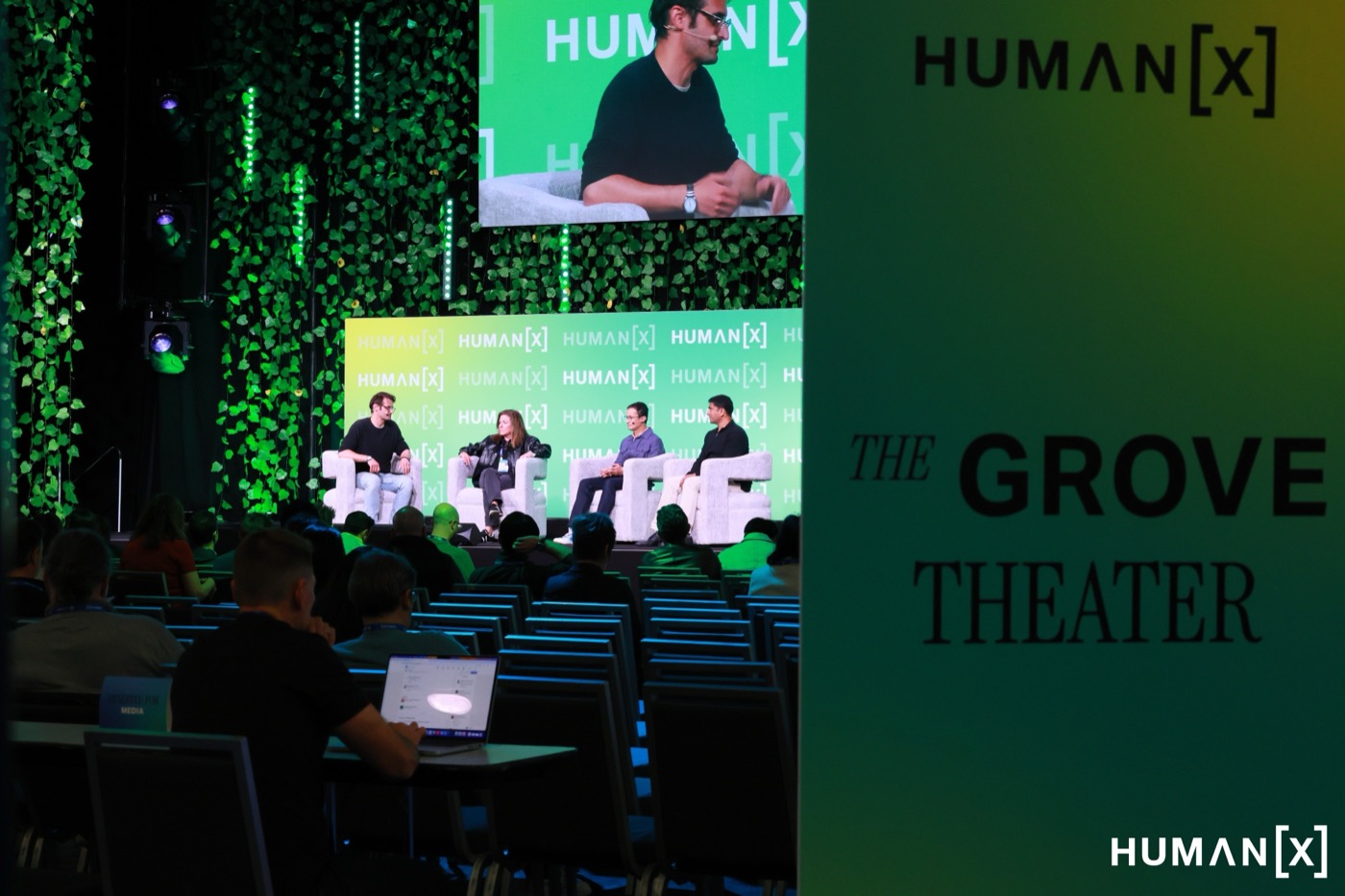
Grove Theater panel at HumanX 2026 — Day 4 session on AI moving from pilot to production
01

Completion · Scale · Real Numbers

AI Moved From Pilot to Production

What Happened

The biggest companies in the world aren't experimenting with AI anymore — they're running on it. Uber's CTO revealed that 70% of their code is now AI-generated. A customer service policy project expected to take a year was finished in two weeks. Zoom announced that meetings now trigger automated task completion — updating your CRM, sending follow-ups, creating project tickets — all before the meeting ends. Pigment showed that financial modeling that took nine months now takes one day. And as tokenThe cost structure of running AI — measured in tokens (roughly one word each). Companies now track token spending like they track cloud computing costs. costs continue to drop, the economics of running these systems at scale are becoming viable for organizations of every size.

What This Means for You

The piloting phase is over. If your organization is still running 'AI experiments' or 'proof of concepts,' you're falling behind companies that have already integrated AI into daily operations. This doesn't mean you need to move recklessly — but it does mean the question has shifted from 'Should we use AI?' to 'Why aren't we using it yet?' The companies pulling ahead aren't the ones with the best technology. They're the ones that committed to deploying it, learned from the mistakes, and kept going.

One Thing to Try

Identify one workflow in your organization that currently takes weeks or months. Ask: "What would this look like if AI handled 80% of the execution and a human handled the judgment calls?" That question alone will reveal where you're leaving time on the table.
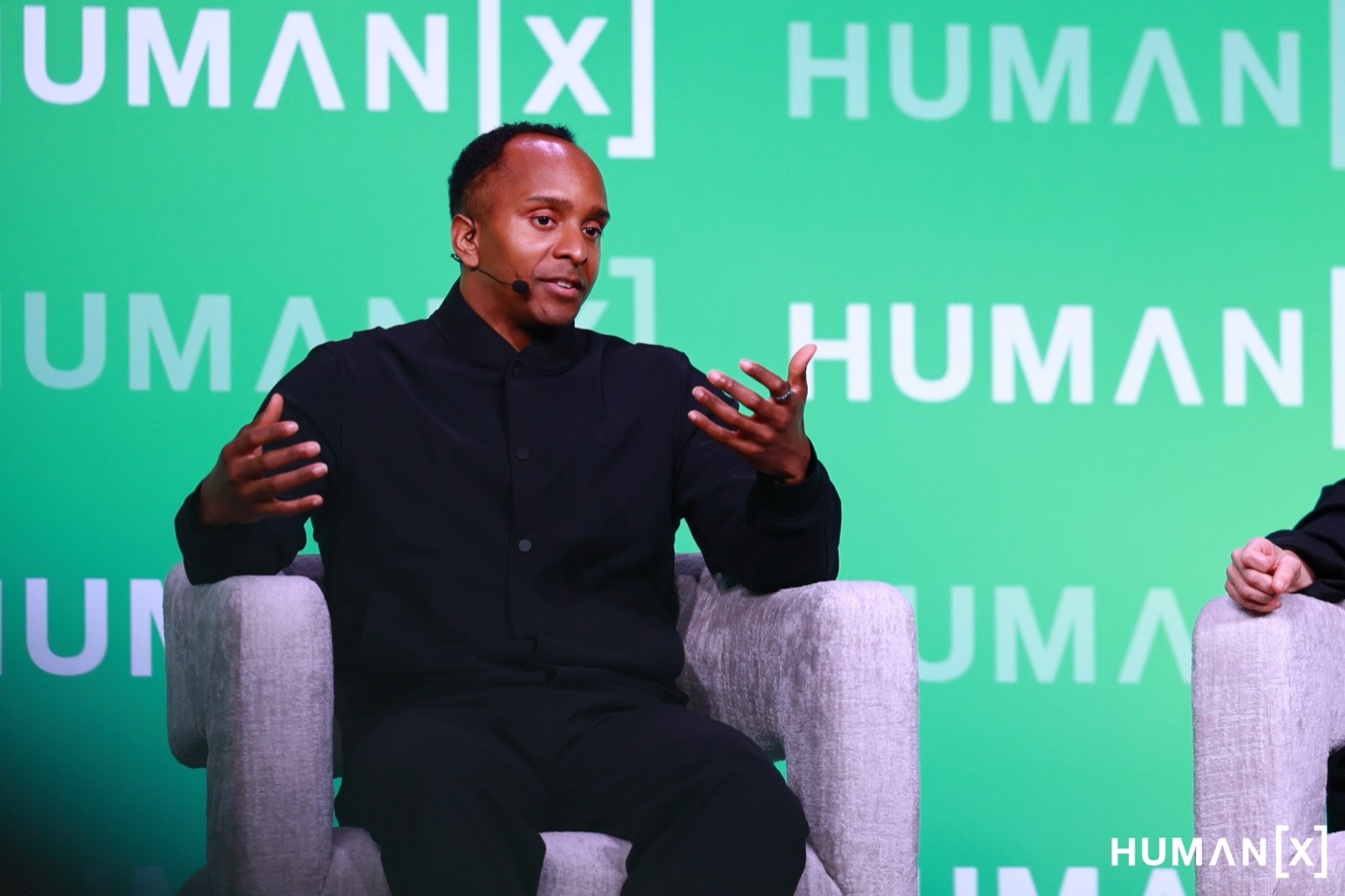
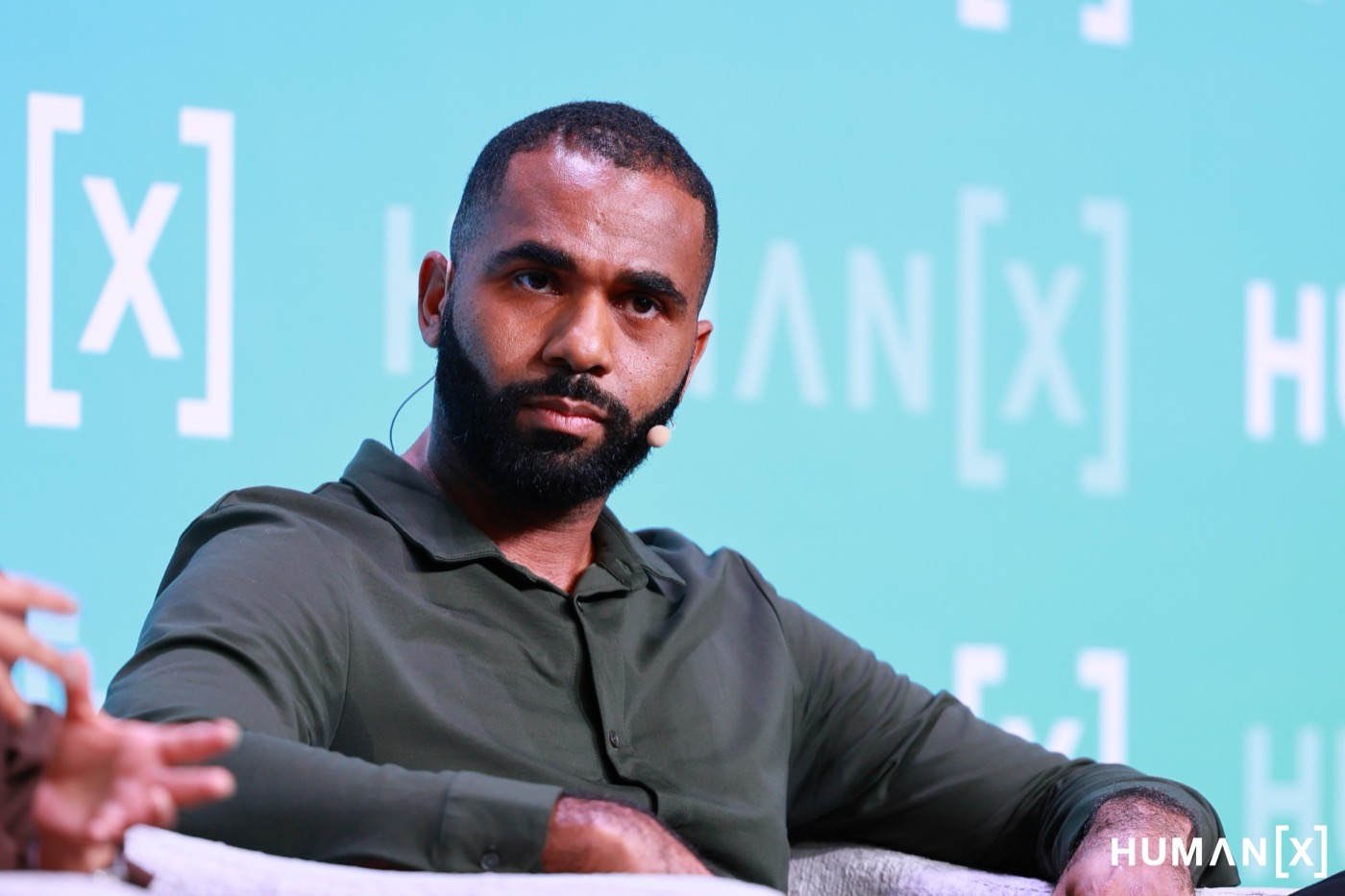
HumanX 2026 Day 4 session on organizational reshaping around AI
02

Org Design · The Diamond · Agents as Colleagues

The Organization Is Reshaping Around AI

What Happened

Datadog's CEO (7,000 employees, 3,000 engineers) shared something striking: they're now hiring 'super junior' and 'super senior' — but less in the middle. Senior architects excel with AI because they're already practiced managers. Junior AI-native hires learn fast. The middle layer of experience is becoming less essential. Separately, Leena AI reported that in their deployed processes, 60% of people are no longer needed for that specific task — but 12% of those become 'human managers of agentAn AI system that doesn't just answer questions but takes actions — booking meetings, updating databases, writing code — with varying degrees of human oversight.s,' a role that didn't exist a year ago.

What This Means for You

The org chart is changing shape — from a triangle to a diamond. The top (strategy, direction) stays human. The bottom (production, execution) is increasingly handled by AI agents. The new growth is in the middle-edges: people who manage, train, and oversee AI systems — roles that increasingly rely on decision intelligenceAI systems that help leaders make strategic decisions by connecting data across departments and surfacing trade-offs in real time. to direct complex operations. If your role is primarily about executing established processes, the ground is shifting under you. If your role involves judgment, context, and managing complexity — you're becoming more valuable, not less. The question to ask: 'Am I building the skill of directing AI, or am I competing with it?'

One Thing to Try

Look at your team's work through the lens of 'judgment work' vs. 'process work.' Which tasks require human context, relationships, and strategic thinking? Which are repeatable and rule-based? The second category is where AI agents will arrive first.

HumanX 2026 Day 4 session on AI governance as competitive advantage
03

Trust · Accountability · The New Table Stakes

Governance Became a Competitive Advantage

What Happened

Governance frameworkA structured set of policies, processes, and accountability measures for how an organization uses AI responsibly.s stopped being a compliance checkbox and became a business differentiator. Credo AI revealed they've catalogued 1,600 distinct AI risks — with mitigations for only 85% of them. A new Gartner study showed that only 40% of AI vendors now make it into production at Fortune 500 companies — the rest fail on trust, not capability. In healthcare, speakers revealed that most AI models give incorrect information about women's health because the training data is biased — women weren't included in most clinical trials until 1992. Without a human in the loopA system design where AI does the work but a human reviews, approves, or corrects before actions are taken. Critical for high-stakes decisions., these biased outputs go unchecked. And in hiring, Gartner predicts that by 2028, one in five job candidates worldwide will be fake.

What This Means for You

When you evaluate an AI vendor or tool, stop asking 'What can it do?' and start asking 'What happens when it's wrong?' The companies winning enterprise deals in 2026 aren't the ones with the best demos — they're the ones that can show rigorous testing, clear accountability, and transparent data provenanceKnowing where your AI's training data came from, how it was collected, and whether it's representative and unbiased.. Governance is no longer the thing that slows you down. It's the thing that lets you move fast without breaking trust. And as inferenceThe cost of running an AI model after it's been built — every question you ask, every response it generates, costs money in compute. costs drop and adoption scales, the stakes of getting governance wrong only get higher. If your organization doesn't have an AI governance framework, you're not just exposed to risk — you're losing deals to competitors who do.

One Thing to Try

Ask three questions about every AI tool your organization uses: (1) Where does the training data come from? (2) What happens when the AI is wrong — who is accountable? (3) Can we audit what it did and why? If you can't get clear answers, that's your governance gap.

On the Ground

Barbara Salami and Leanna Baker Williams on the conference floor at HumanX 2026 in San Francisco

Barbara and Leanna — on the ground at HumanX 2026, San Francisco

Your Next Step

One question to ask your team this week

"If AI agentAn AI system that doesn't just answer questions but takes actions — booking meetings, updating databases, writing code — with varying degrees of human oversight.s are becoming members of your workforce, who in your organization is responsible for managing them?"

One decision to sit with

The companies that moved fastest this year didn't just adopt AI — they reorganized around it. That means new roles, new budget lines, and new accountability structures. You don't need to do all of that this week. But you do need to start asking who owns AI decisions in your organization — because if nobody does, everyone will, and that's how you get shadow AIWhen employees use AI tools without IT's knowledge or approval — the new version of "shadow IT" that creates security and governance risks., wasted spend, and trust problems.

That's what KAINDLY helps with. Not selling you AI. Helping you understand it.

Try This

Take the Assessment

Not sure where you stand with AI? KAINDLY's AI Readiness Assessment gives you a personalized report on your current comfort level, strengths, and where to focus next.

You don't need to know everything.
You just need to start.

KAINDLY helps professionals build real AI fluency — at your own pace, in your own context, without the jargon.