
KAINDLY Live Coverage
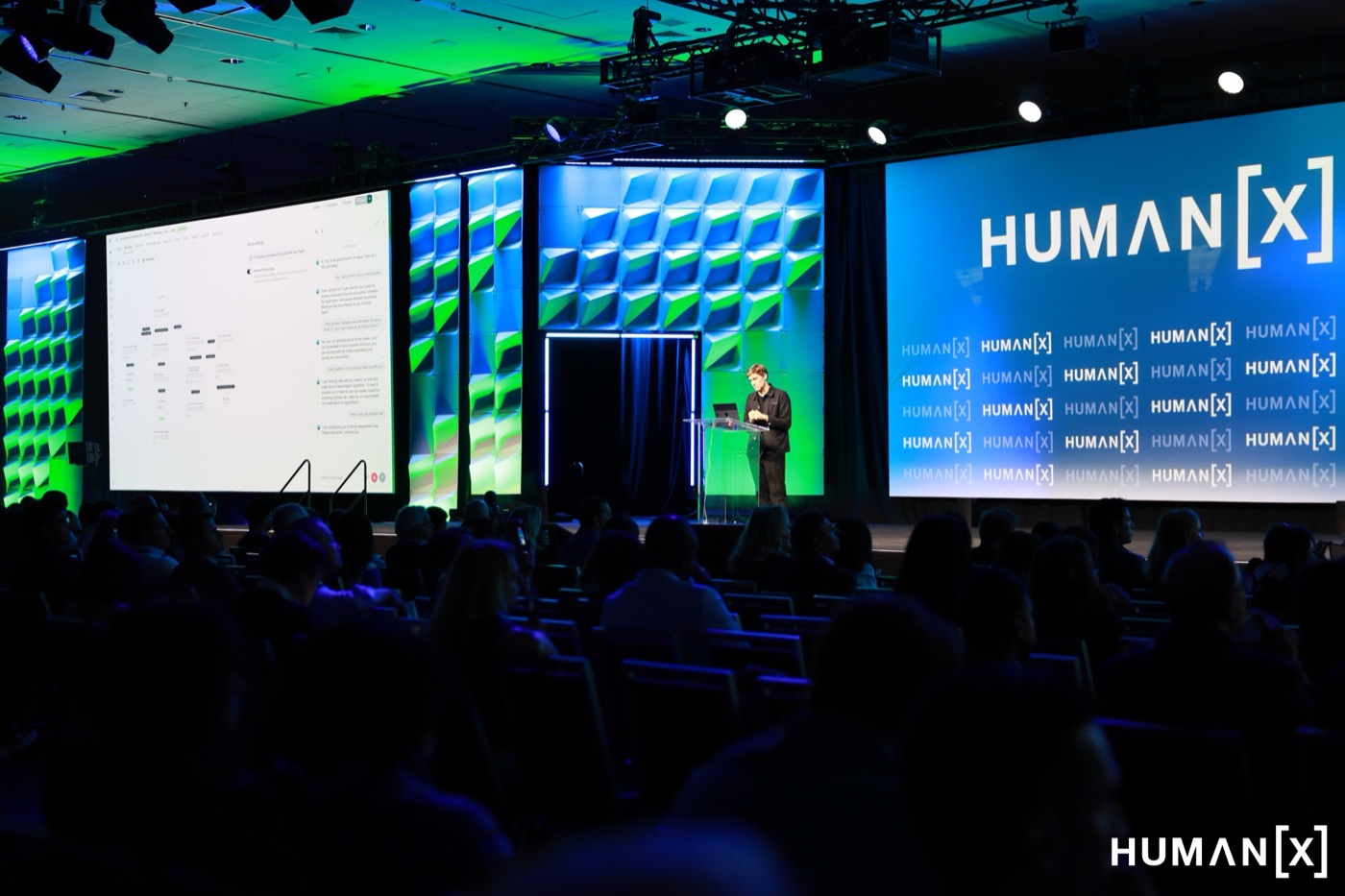
HumanX 2026 Day 3 conference stage

HUMAN[X]

San Francisco April 6–9, 2026

Day 3 — The Plain-Language Version

AI stopped being about what the technology can do. Day 3 was about who gets to use it.

Day 3 was when AI stopped being about what the technology can do — and started being about who gets to use it.

April 8, 2026 Leanna Baker Williams KAINDLY Collective

Why This Exists

AI conferences talk to the industry.
We translate it for everyone else.

We're not a research firm, and we're not positioning ourselves as conference translators. We came to listen, learn, and engage. What became clear is that many people who couldn't attend still wanted a clear view of what's actually being said and done in these rooms. So we're sharing what we're seeing and hearing, in plain language, to make it more accessible and useful.

Twenty-one sessions. One through-line: the gap between what AI can do and who actually benefits from it. Day 3 at HumanX wasn't about bigger models or faster chips. It was about access — who gets to build, who gets left behind, and whether the tools arriving right now will widen the divide or close it. Three things stood out.

Quick Glossary — 10 Terms You'll See Below
Vibe Coding
Building software by describing what you want in plain language, rather than writing code manually. AI generates the code for you.
Hallucination
When an AI confidently states something that isn't true. It's not lying — it's pattern-matching incorrectly.
Foundation Model
A large AI system (like ChatGPT, Claude, or Gemini) trained on massive data that serves as the base for many applications.
Benchmark
A standardized test used to compare AI models. Useful but often gamed — models can be optimized to perform well on specific benchmarks without being better overall.
Token
The basic unit AI uses to process text. Roughly one token equals one word. Companies now measure AI usage in tokens the way they measure cloud computing in hours.
Open Source
AI models whose code and weights are publicly available for anyone to use, modify, and build on — as opposed to closed/proprietary models.
Inference
The process of an AI model generating a response to your input. Training teaches the model; inference is the model doing its job.
Agentic Workflow
When AI doesn't just answer questions but takes a series of actions — researching, deciding, executing — with minimal human intervention.
MCP (Model Context Protocol)
A standard that lets AI models connect to and use external tools and data sources, like a universal adapter for AI.
Curated Data
Information that has been verified, organized, and quality-checked by humans — as opposed to raw, unfiltered data scraped from the internet.

What You Need to Know

THREE
TAKEAWAYS

HumanX 2026 main stage with audience — Day 3 session on vibe coding and access
01

Vibe Coding · Access · The 99%

Everyone Is Building Now

What Happened

The barrier between having an idea and shipping a working product has collapsed. At HumanX, session after session showed non-technical people — executives, recruiters, music producers — building real software without writing a single line of code themselves. Replit's CEO shared that board members and Fortune 500 executives are among their most active users. Lovable reported 100,000 projects built on their platform every single day.

What This Means for You

You don't need to wait for IT to build what you need. The tools exist right now for anyone — regardless of technical background — to create working applications, dashboards, and internal tools. Andrew Ng, one of the most respected names in AI, put it bluntly: "Everyone should learn to code. The advice that you don't need to because AI will automate it — we'll look back on that as some of the worst career advice ever given." He clarified: don't write code by hand. Get AI to do it for you. On his teams, marketers and finance professionals who use these tools are already outperforming those who don't — and the gap is growing.

One Thing to Try

Pick one repetitive task your team does manually — a report, a tracker, a simple calculator — and try building it yourself using Replit, Lovable, or Claude. It will take less time than you think, and you'll understand the shift firsthand.

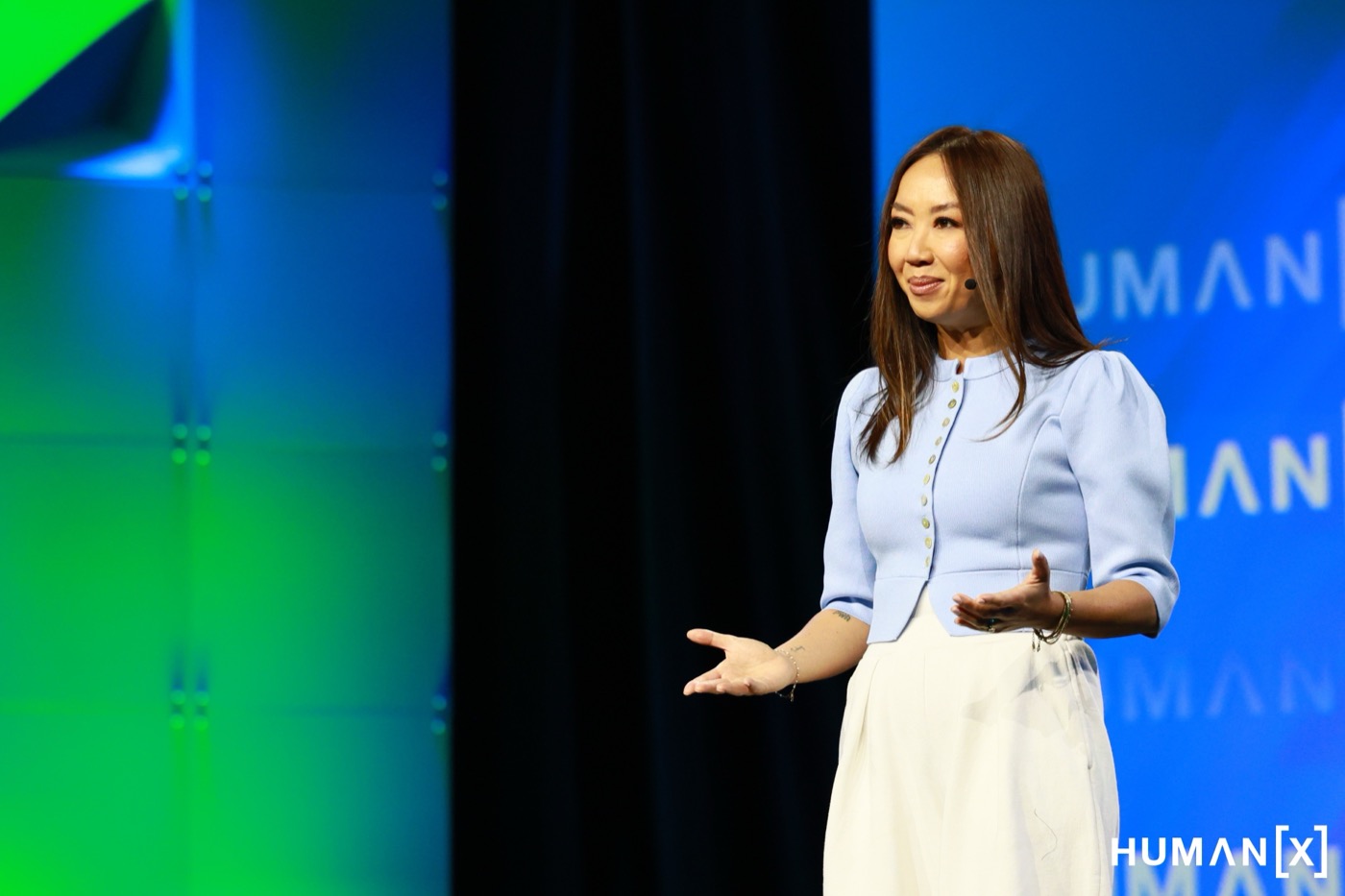
Speaker at HumanX 2026 — Day 3 session on AI reliability and trust
02

Trust · Hallucination · Production AI

Reliability Is the Real Race

What Happened

The most provocative session of the day came from Vinod Khosla and Scaled Cognition. Their claim: hallucinationWhen an AI confidently states something that isn't true. It's not lying — it's pattern-matching incorrectly. rates in production AI are five times higher than what companies report. Standard language models make things up more often than most organizations realize — and when you chain multiple AI agents together, the errors compound. Meanwhile, Arena (the independent AI evaluation platform) showed that no single AI model dominates all tasks, and vendor-reported benchmarksA standardized test used to compare AI models. Useful but often gamed — models can be optimized to perform well on specific benchmarks without being better overall. are routinely cherry-picked.

What This Means for You

If your organization is deploying AI that talks to customers, makes recommendations, or takes actions — the question isn't whether it's smart enough. It's whether it's reliable enough. A model that's right 95% of the time sounds impressive until you realize that means one in twenty interactions goes wrong. For high-stakes work — finance, healthcare, customer service — demand systems that can prove what they will and won't do, not just demonstrate what they can do on a good day.

One Thing to Try

Ask your AI vendor: "What is your actual hallucination rate in production — not on benchmarks, but with real customer data?" If they can't answer specifically, that tells you something important.

Presenter at HumanX 2026 — Day 3 session on workforce reskilling and AI fluency
03

Reskilling · Human Judgment · The New Bottleneck

The Workforce Gap Is Widening Fast

What Happened

Andrew Ng and Coursera's CEO painted a stark picture. Someone enrolls in an AI course on Coursera every four seconds — double last year's rate. Projects that took 15 engineers three months now take 2 engineers one month. But the most important shift isn't about speed — it's about what's scarce. The bottleneck has moved from building to deciding what to build. Product thinking, strategic judgment, and the ability to ask the right questions are now the most valuable skills in the room.

What This Means for You

The gap between AI-fluent and AI-illiterate workers is widening every month. Airbnb shared that 97% of their engineers now use AI workflows weekly, and their heaviest AI users produce roughly twice the output — and those aren't the junior people. They're the experienced ones. If you're three to four months behind on AI tools, you're already "materially less efficient," in Ng's words. The good news: you don't need a computer science degree. You need curiosity and 30 minutes a week of practice.

One Thing to Try

Block 30 minutes this week to try one AI coding tool — Replit, Claude, or Cursor. Don't build anything for work. Just build something small for yourself. A meal planner, a reading tracker, anything. The goal is to feel the shift, not produce a deliverable.

Your Next Step

One question to ask your team this week

"What would change in your work if building a custom tool took 30 minutes instead of 30 days?"

One decision to sit with

The barrier to building just disappeared. That means the competitive advantage isn't technical skill anymore — it's knowing which problems are worth solving. Spend 15 minutes this week identifying the friction in your workflows. That's where AI creates the most value.

That's what KAINDLY helps with. Not selling you AI. Helping you understand it.

Try This

Take the Assessment

Not sure where you stand with AI? KAINDLY's AI Readiness Assessment gives you a personalized report on your current comfort level, strengths, and where to focus next.

You don't need to know everything.
You just need to start.

KAINDLY helps professionals build real AI fluency — at your own pace, in your own context, without the jargon.